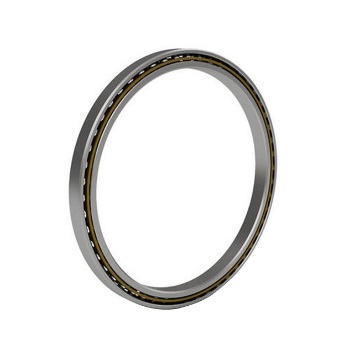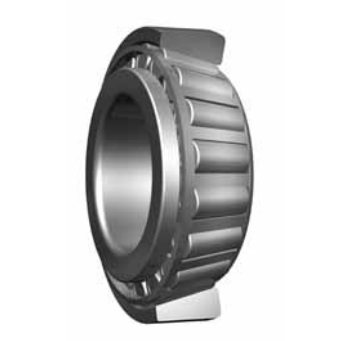


JSA020XPO Bore 2 Inch, Imperial Sealed Or Shielded Type X, 4-Point Contact Ball Bearings



The JSA020XPO Thin-section four-point contact ball bearings are widely used in fields with stringent space and precision requirements, including: industrial robots (wrist and elbow joints), medical equipment (CT scanner rotating frames, surgical robots), aerospace (satellite antenna drive mechanisms), semiconductor equipment (wafer handling robotic arms), optical instruments (laser trackers, precision rotary tables), and precision machine tools (rotary worktables).
The JSA020XPO bearing is a Inch Sealed or Shielded Type X 4-Point Contact Ball Bearings with an inner diameter of 2 inch , an outer diameter of 2.5 inch, a width of 0.25 inch. It typically uses ISO Class NORMAL / ABEC-1 grade precision tolerances and AISI 52100 Steel rings, AISI 52100 Steel rolling mlement. Its dynamic radial rated load is approximately 515 N, its static radial rated load is approximately 680 N. Its dynamic axial rated load is approximately 3514 N, its static axial rated load is approximately 7606 N. J = Buna N Rubber Seal (Double Sealed) type, together determine its load-bearing capacity, rotational accuracy, and applicable working conditions.
Interchange code: KAYDON KDY.JA020XP0, SILVERTHIN JSA020XP0, SKF FPXA2002RS1, FAG L18QA2002RSD, NSK NBX05006DD, INA CSXA0202RS, SSB RJA020XP0, NTN KXA050LL
JSA020XPO bearings ( 2 inch x 2.5 inch x 0.25 inch) have the advantages of Extremely compact, lightweight design, composite load-bearing capacity, high rigidity, and flexible installation, and are therefore widely used in the Robotics, aerospace, semiconductor equipment, medical instruments and optoelectronic turntables.
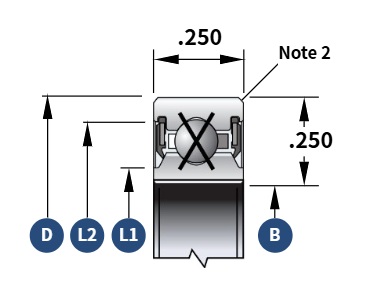
| Part Number | JSA020XPO |
| Bearing Type | Inch Sealed or Shielded Type X 4-Point Contact Ball Bearings |
| Equivalent | KAYDON KDY.JA020XP0 SILVERTHIN JSA020XP0 SKF FPXA2002RS1 FAG L18QA2002RSD NSK NBX05006DD INA CSXA0202RS SSB RJA020XP0 NTN KXA050LL |
| Interchangeable | SILVER THIN JSA020XPO |
| Cage | Brass; snapover separator |
| Series | JSA SERIES 1/4" X 1/4" |
| Balls | standard 1/8" balls |
| Race Width Tolerance | +0.000 -0.005" |
| Contact angle [°] | 30 |
| Seal type | J = Buna N Rubber Seal (Double Sealed) |
| Units | Inch |
| Precision Class | ISO Class NORMAL / ABEC-1 |
| Rows NO. | One |
| B φ Inside [inch] | 2 |
| D Φ Outside [inch] | 2.5 |
| Width [inch] | 0.25 |
| L1 [inch] | 2.186 |
| L2 [inch] | 2.314 |
| (Note 2) max | 0.025" |
| RADIAL DYNAMIC [lbf] | 515 |
| RADIAL STATIC [lbf] | 680 |
| THRUST DYNAMIC [lbf] | 789 |
| THRUST STATIC [lbf] | 1709 |
| MOMENT DYNAMIC [LBS-in] | 435 |
| MOMENT STATIC [LBS-in] | 770 |
| TORQUE MAX NO LOAD [OZ-IN] | 6 |
| APPROX WEIGHT [lb] | 0.1 |
The JSA020XPO Thin-section four-point contact ball bearings are mainly composed of a thin-walled inner ring, a thin-walled outer ring, steel balls, and a cage. The raceway has a Gothic arch shape, and the steel balls form four-point contact with the inner and outer rings. The cross-sectional dimensions are constant and extremely thin.
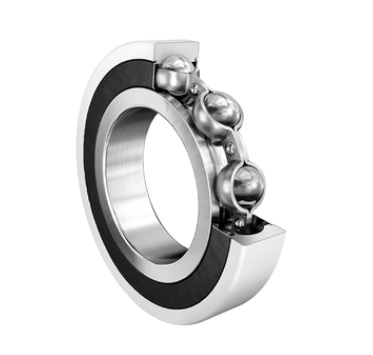
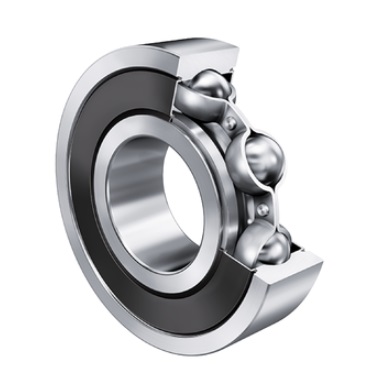
Thin-section four-point contact ball bearings utilize a thin-walled constant cross-section design, resulting in lightweight construction and a small footprint. A single bearing can simultaneously withstand radial loads, bidirectional axial loads, and overturning moments. They possess high rigidity, high-speed capability, and are easy to install, making them a viable replacement for traditional combined bearings.
Share this product to:


 Let more people see your product