

China Bearing BS2-2205-2CS/VT143
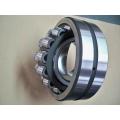

The BS2-2205-2CS/VT143 bearing is a Spherical Roller Bearing with an inner diameter of 25 mm , an outer diameter of 52 mm, a width of 18 mm. It typically uses P0 p6 p5 p4 p2 grade precision tolerances and BS2 type, together determine its load-bearing capacity, rotational accuracy, and applicable working conditions.
Spherical roller bearings
Radial and axial load capacity
Compensation of angular misalignments
Reduced adjustment angle
Bearings with cylindrical bore
Bearings with tapered bore
Bearings with adapter sleeve or withdrawal sleeve
Sealing
Lubrication
Operating temperature
Cages
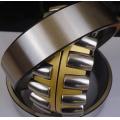
Spherical roller bearings are double row, self retaining units comprising solid outer rings with a concave raceway, solid inner rings and barrel rollers with cages.
The inner rings have cylindrical or tapered bores.
The symmetrical barrel rollers orient themselves freely on the concave outer ring raceway. As a result, shaft flexing and misalignment of the bearing seats are compensated, see link.
Many sizes of spherical roller bearings are of an X-life design.
These bearings have improved kinematics and optimised surfaces, are made from higher performance materials and do not have a rigid central rib.
As a result, the basic dynamic load rating and, under identical operating conditions, the basic rating life of the bearings is significantly improved. In certain applications, this means that a smaller bearing arrangement can be designed.
X-life spherical roller bearings have the suffix E1 and are indicated in the dimension tables.
Radial and axial load capacity
Spherical roller bearings can support axial forces in both directions and high radial forces. They are designed for very high load carrying capacity and, since they have the maximum possible number of large and particularly long barrel rollers, are also suitable for the heaviest loads.
Due to the narrow osculation between the rollers and raceways, uniform stress distribution is achieved in the bearing.
Compensation of angular misalignments
Spherical roller bearings compensate for angular misalignments. The permissible adjustment angle is stated for loads P < 0,1 · Cr,
These adjustment angles are permissible if
the angular deviation is constant (static angular misalignment)
the rotating component is the inner ring.
Reduced adjustment angle
If the rotating component is the outer ring, the inner ring undergoes tumbling motion or the adjustment angles are larger than stated in the table, the angular adjustment facility is smaller.
If such applications are present, please contact us.
Share this product to:


 Let more people see your product
-
- 22226C/W33 53526K Spherical Roller Bearing
- Item:22226C/W33 53526K 130*230*64 Bearing Type: Spherical Roller Bearing Lubrication: Oil or Grease Dimensions: 130mm x
-
- 23272 23272CAK 23272CA 23272CAKF3/W33 Spherical Roller Bearing
- Item:23272 23272CAK 23272CA 23272CAKF3/W33 360*650*232 Bearing Type: Spherical Roller Bearing Lubrication: Oil or Grease Dimensions:
-
- 239/900CAF1/W33 239/900 Spherical Roller Bearing
- Item:239/900CAF1/W33 239/900 900*1180*206 Bearing Type: Spherical Roller Bearing Lubrication: Oil or Grease Dimensions: 900mm x
-
- 23156X2CA 23156 Spherical Roller Bearing
- Item:23156X2CA 23156 280*460*130 Bearing Type: Spherical Roller Bearing Lubrication: Oil or Grease Dimensions: 280mm x
-
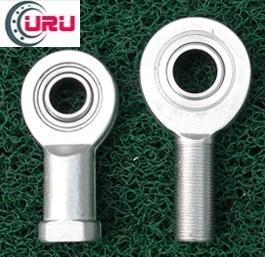
- SAJK28C/X SIJK28C/X Bearing 28x66x35mm
- Item:SAJK25C/X SIJK25C/X 25*60*31mm Type: Rod end Bearings Lubrication: Oil or Grease Dimensions:25mmx60mmx31mm/Metric ID (inner diameter)/Bore: 25mm OD
-
- FC3248168A Mill Four Row Cylindrical Roller Bearing
- Item:FC3248168A 160*240*168 Bearing Type: Mill four row cylindrical roller bearing Lubrication: Oil
-
- GW211PP2 GW211PPB2 GW211PPB8 Bearing
- Item:GW211PP2 55.58*100*33.34 Bearing Type:GW211PP2 Agriculture Machinery Bearing Lubrication: Oil or Grease Dimensions: 55.58 mmx100mm
-
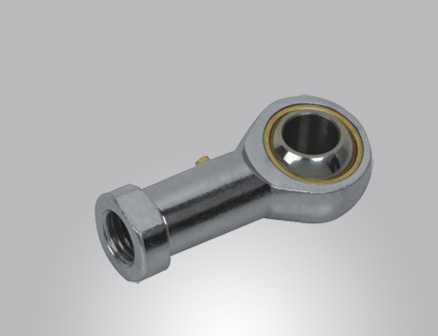
- PHS12 Female Rod End Bearing
- Items:PHS12 Female Rod End Bearing 12x32x16mm Inside Diameter:12mm Outside Diameter:32mm Thickness/Width:16mm