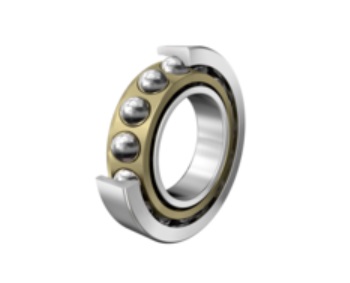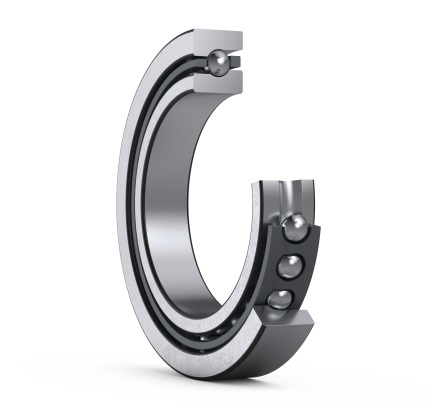


7405-B-MP-UO Angular Contact Ball Bearings, Single Row, Solid Brass Cage
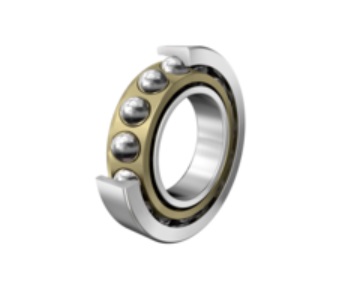


The 7405-B-MP-UO Single-row angular contact ball bearings are widely used in high-speed, high-precision small to medium-sized equipment, such as: machine tool spindles (machining centers, grinding machines), industrial robots (joints), turbochargers, medical equipment (high-speed drills), electric vehicle drive motors, and precision measuring instruments.
The 7405-B-MP-UO bearing is a Angular contact ball bearings, single row with an inner diameter of 25 mm , an outer diameter of 80 mm, a width of 21 mm. It typically uses PN grade precision tolerances and bearing steel rings, bearing steel rolling mlement. Its dynamic radial rated load is approximately 43453 N, its static radial rated load is approximately 25962 N. Open type, together determine its load-bearing capacity, rotational accuracy, and applicable working conditions.
Interchange code: 7405-B-MP-UO,7405B.MP.UO
7405-B-MP-UO bearings ( 25 mm x 80 mm x 21 mm) have the advantages of High speed, high precision, Low friction and low heat generation, and are therefore widely used in the Machine tool spindles, high-speed motors, ball screws, industrial robots, precision instruments, medical equipment, and aerospace components.
| Part Number | 7405-B-MP-UO |
| Design Type | B = Modified internal construction |
| Bearing Type | Angular contact ball bearings, single row |
| Series | 74..-B-XL-MP |
| X-Life | XL long life design |
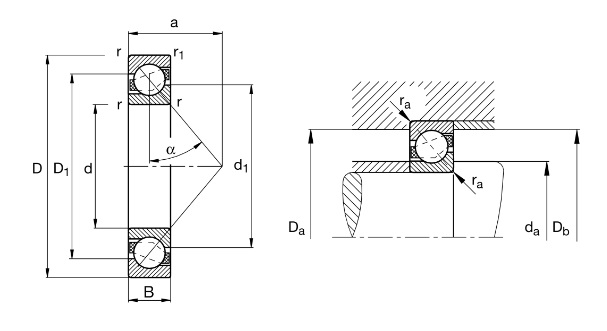
| Contact angle - α [°] | 40 |
| Rows NO. | single |
| Manufacturer Part Code | 7405-B-MP-UO |
| Cage | MP = solid brass cage, ball guided |
| Equivalent | 7405-B-MP-UO,7405B.MP.UO |
| Lubricant | Without |
| Seal type | Open |
| Bearing pair | UO = Universal design for mounting in pairs, bearing pair is clearance-free in O and X arrangement |
| Heat stabilization | S0 = up to 150° |
| m Weight [kg] | 0.586 |
| Reference From | FAG 7405-B-MP-UO |
| Dimensions | |
| d φ Inside [inch] | 0.984 |
| D Φ Outside [inch] | 3.150 |
| B Width [inch] | 0.827 |
| r(min.) [inch] | 0.059 |
| r1(min.) [inch] | 0.039 |
| D1 [inch] | 2.280 |
| d1 [inch] | 1.899 |
| a [inch] | 1.280 |
| Performance | |
| Cr Radial Dynamic [N] | 43453 |
| C0r Radial static [N] | 25962 |
| Cur Radial Fatigue [N] | 1789 |
| nG Limiting speed (oil) [r/min] | 16578 |
| nB Reference speed (grease) [r/min] | 7495 |
| Mounting dimensions | |
| da(min.) [inch] | 1.417 |
| Da(max.) [inch] | 2.717 |
| Db(max.) [inch] | 2.929 |
| ra(max.) [inch] | 0.059 |
| ra1(max.) [inch] | 0.039 |
| Tolerance for axial clearance or preload per set - Tol(+) [µm] | 8 |
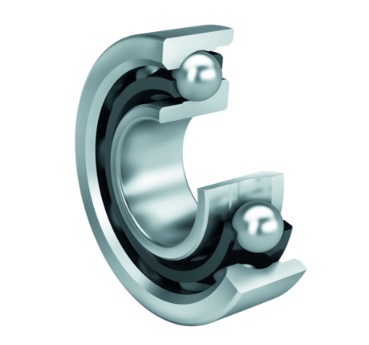
The 7405-B-MP-UO Single-row angular contact ball bearings mainly consist of an inner ring, an outer ring, steel balls, and a cage. The raceways of the inner and outer rings are offset from each other to form a contact angle, typically 15°, 25°, or 40°. They feature a non-separable design, and the cage can be made of stamped steel, solid brass, or phenolic resin.
Single-row angular contact ball bearings can simultaneously withstand radial loads and unidirectional axial loads. The larger the contact angle, the stronger the axial load capacity. When installed in pairs (back-to-back, face-to-face, or tandem), they can withstand bidirectional axial loads and significantly improve system rigidity. They possess high-speed, low-friction characteristics, with precision grades ranging from P4 to P2, making them suitable for precision transmissions.
Share this product to:


 Let more people see your product