

23864-K-MB Spherical Roller Bearings With Central Rib Tapered Bore(K = Taper 1:12)
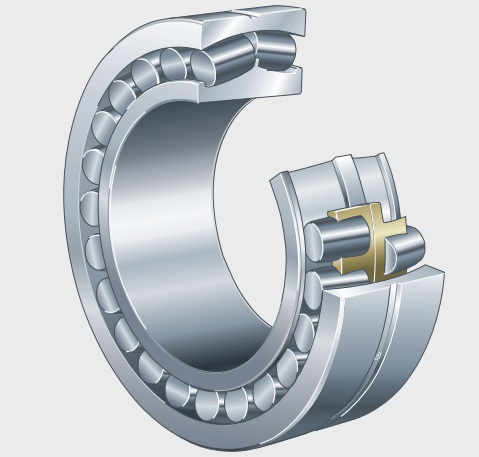


The 23864-K-MB Double-row spherical roller bearings are suitable for heavy-load, impact, and eccentric conditions. Classic applications include vibrating screen exciters, crushers, fans, paper machine press rolls, mining conveyor equipment, and marine propulsion shafts.
The 23864-K-MB bearing is a Spherical roller bearings With central rib Tapered bore(K = taper 1:12) with an inner diameter of 320 mm , an outer diameter of 400 mm, a width of 60 mm. GCr15, GCr15SiMn, SUJ2 rings, GCr15, SUJ2 rolling mlement. Its dynamic radial rated load is approximately 679905 N, its static radial rated load is approximately 1629935 N. It uses CN standard radial clearance, together determine its load-bearing capacity, rotational accuracy, and applicable working conditions.
23864-K-MB bearings ( 320 mm x 400 mm x 60 mm) have the advantages of Self-aligning, high load-bearing capacity, and impact resistant, and are therefore widely used in the Mining machinery, metallurgical equipment, papermaking machinery, vibrating screens, wind turbines, and large industrial gearboxes.

| Part Number | 23864-K-MB |
| Design drawing | 2 |
| Bore Type | K = Tapered bore (K = taper 1:12) |
| RIC | CN |
| Row | 2 |
| Bearing Type | Spherical roller bearings With central rib Tapered bore(K = taper 1:12) |
| Manufacturer Part Code | 23864KMB |
| Cage | MB = Solid brass cage, guided on inner ring |
| Measurement | Metric |
| d φ Inside [inch] | 12.598 |
| D Φ Outside [inch] | 15.748 |
| B Width [inch] | 2.362 |
| nG Limiting speed (oil) [min–1] | 1191 |
| Weight [kg] | 17.9 |
| r(min.) Chamfer [inch] | 0.083 |
| D1 [inch] | 14.886 |
| ds [inch] | 0.189 |
| ns [inch] | 0.374 |
| Cr Radial Dynamic [lbf] | 152842 |
| C0r Radial static [lbf] | 366409 |
| Cur Radial Fatigue [lbf] | 25390 |
| Temperature - T(min)[°C] | -30 |
| Temperature - T(max)[°C] | +200 |
| Mounting dimensions | |
| da(min.) [inch] | 13.000 |
| Da(max.) [inch] | 15.346 |
| ra(max.) [mm] | 17.9 |
| Calculation coefficient | |
| e | 0.13 |
| Y0 | 4.95 |
| Y1 | 5.06 |
| Y2 | 7.53 |
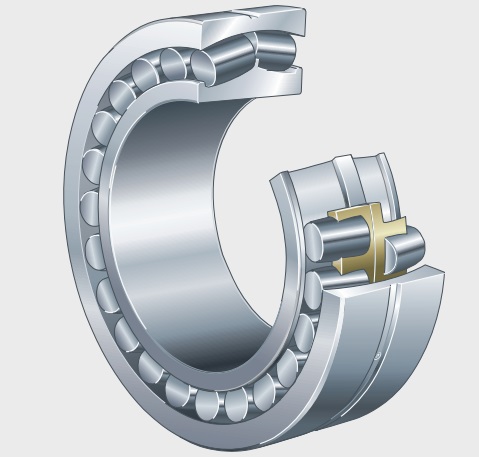
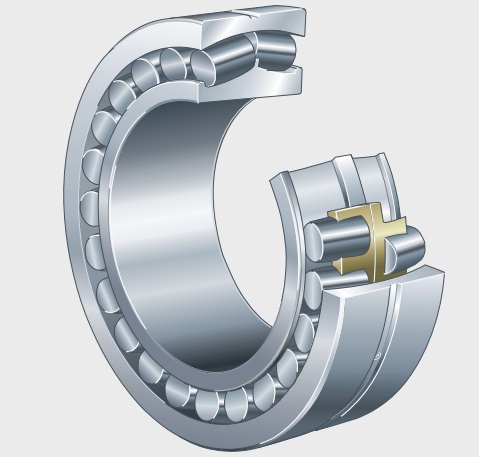
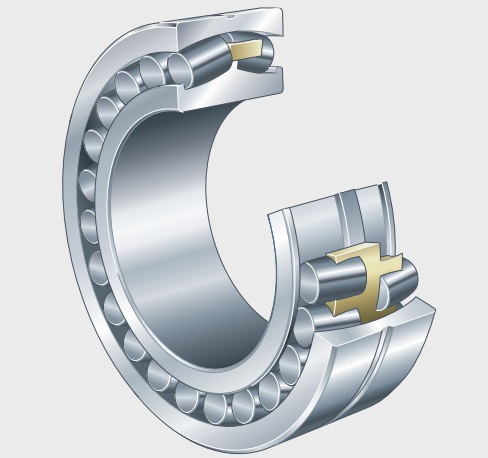
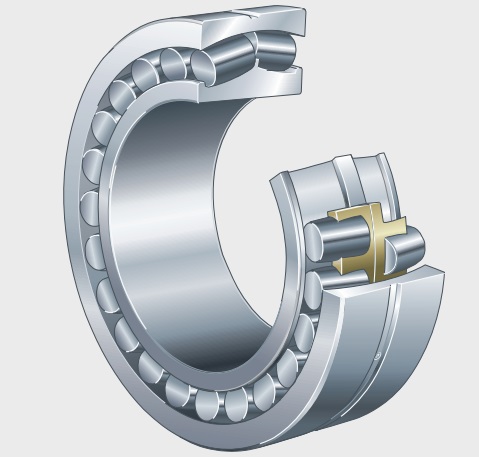
The 23864-K-MB Double-row spherical roller bearings mainly consist of an inner ring, an outer ring, two rows of spherical rollers, a cage, and seals. The outer ring raceway has a spherical structure, while the inner ring has a double-row raceway. The rollers and raceways are logarithmically curved. The cage is typically made of stamped steel or machined brass.
Double-row spherical roller bearings possess excellent self-aligning properties, compensating for shaft deflection, installation errors, and misalignment. They can simultaneously withstand radial loads and bidirectional axial loads, exhibiting extremely high load-bearing capacity and strong impact resistance. Furthermore, the internal clearance can be optimized for vibration conditions, effectively reducing frictional temperature rise.
Share this product to:


 Let more people see your product