

22205CCK/C3W33 Bore 25 Mm, Stamped Steel Cages, Spherical Roller Bearings
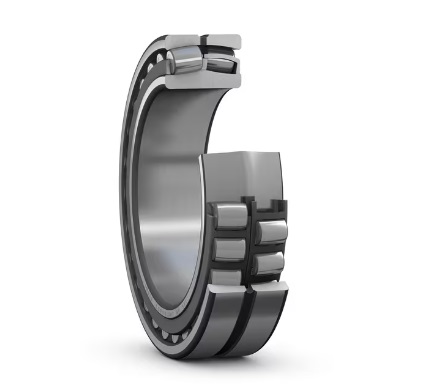


The 22205CCK/C3W33 Double-row spherical roller bearings are suitable for heavy-load, impact, and eccentric conditions. Classic applications include vibrating screen exciters, crushers, fans, paper machine press rolls, mining conveyor equipment, and marine propulsion shafts.
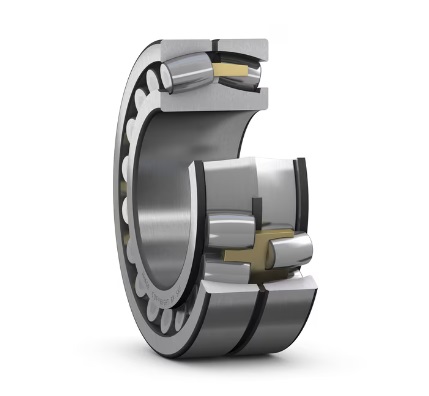
The 22205CCK/C3W33 bearing is a Spherical roller bearings, double row with an inner diameter of 25 mm , an outer diameter of 52 mm, a width of 18 mm. GCr15SiMn rings, GCr15SiMn rolling mlement. It uses C3 standard radial clearance, Open type, together determine its load-bearing capacity, rotational accuracy, and applicable working conditions.
22205CCK/C3W33 bearings ( 25 mm x 52 mm x 18 mm) have the advantages of Self-aligning, high load-bearing capacity, impact resistant, and adaptable to heavy loads, and are therefore widely used in the Gearboxes, drive shafts, conveying equipment, general machinery.
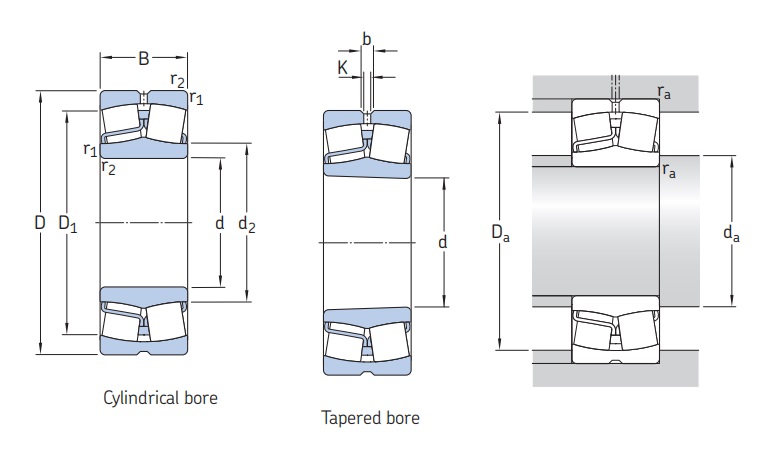
| Part Number | 22205CCK/C3W33 |
| Bearing Type | Spherical roller bearings, double row |
| Internal design | CC = Flangeless inner ring, guide ring centred on the inner ring, two stamped steel cages |
| Reference From | SKF 22205CCK/C3W33 |
| Cage | CC = stamped steel cages |
| Seal | Open |
| Internal clearance | C3 |
| Weight [lb] | 0.397 |
| Permissible angular misalignment | 2 degrees |
| Heat stabilization | 392 °F (200 °C) |
| Roller bearing type | Spherical |
| Lubrication | W33 = Annular groove and three lubrication holes in the outer ring |
| Bore Type | K = Tapered bore, taper 1:12 |
| Principal Dimensions | |
| Inside - d φ [inch] | 0.984 |
| Inside - d φ tolerance | +0.021 mm to 0 |
| Outside - D Φ [inch] | 2.047 |
| Outside - D Φ tolerance | -0.013 mm to 0 |
| Width - B [inch] | 0.709 |
| Width - B tolerance | -0.06 mm to 0 |
| d2 [inch] | 1.232 |
| D1 [inch] | 1.740 |
| b [inch] | 0.146 |
| K [inch] | 0.079 |
| r1,r2(min.) [inch] | 0.039 |
| Performance | |
| Dynamic Radial - Cr [lbf] | 11116 |
| Static Radial - C0r [lbf] | 9831 |
| Speed ratings (oil) - nG [rpm] | 16942 |
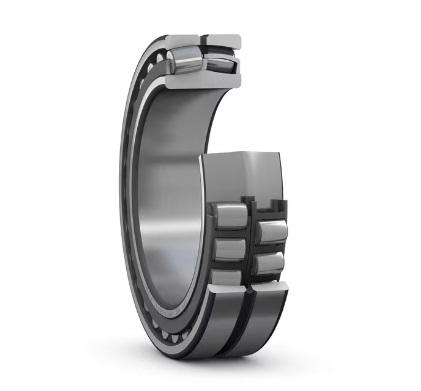
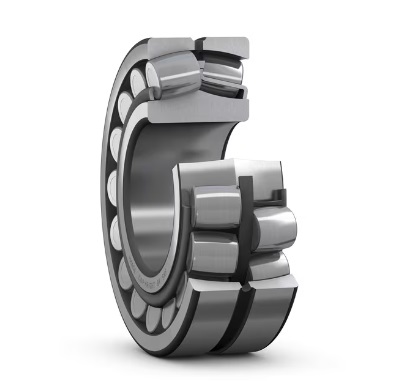
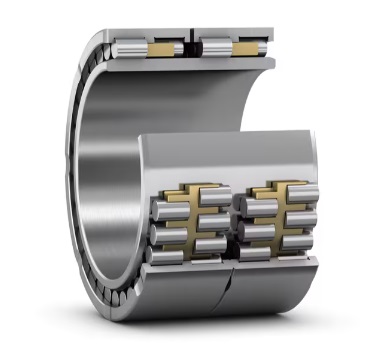
The 22205CCK/C3W33 Double-row spherical roller bearings mainly consist of an inner ring, an outer ring, two rows of spherical rollers, a cage, and seals. The outer ring raceway has a spherical structure, while the inner ring has a double-row raceway. The rollers and raceways are logarithmically curved. The cage is typically made of stamped steel or machined brass.
Double-row spherical roller bearings possess excellent self-aligning properties, compensating for shaft deflection, installation errors, and misalignment. They can simultaneously withstand radial loads and bidirectional axial loads, exhibiting extremely high load-bearing capacity and strong impact resistance. Furthermore, the internal clearance can be optimized for vibration conditions, effectively reducing frictional temperature rise.
Share this product to:


 Let more people see your product